Dr. Frank-Detlef Bockelmann
My research bridges physical ocean dynamics, environmental transport processes, spatial habitat analysis, and quantitative modelling to deepen our understanding of how coastal and shelf sea systems evolve and interact with natural and human pressures. I work with numerical and statistical frameworks to investigate how currents, wind forcing, and water mass movements govern transport pathways, connectivity, and dispersion in complex coastal environments.
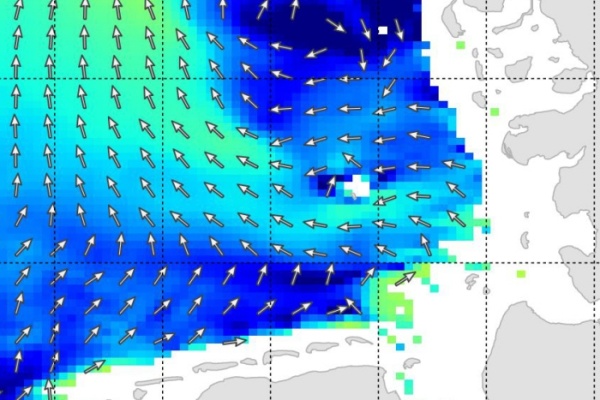
A core component of this work is the development and application of Lagrangian transport models, hydrodynamic reanalyses, and interactive drift prediction tools to simulate how water, particles, and tracers move over space and time. These tools help quantify long-range residual transport and flow patterns that emerg from tides, winds, and mesoscale dynamics, and the resulting drift behaviour of objects, pollutants, or biogeochemical material. By linking high-resolution physical forcing with particle tracking, we can reconstruct past pathways and explore probable future scenarios for dispersal and exposure under varying conditions.
To make these insights accessible, I contribute to interactive frameworks like the Helmholtz Coastal Data Center (HCDC), which provides open access to observational datasets, model outputs, maps, and web-based tools that support exploration of current fields, real-time drift projections, and environmental context data useful for science, decision support, and stakeholder engagement. These tools facilitate interpretation of the origins and fate of water masses and materials, from routine ocean conditions to urgent risk scenarios such as pollutant drift and coastal hazards.
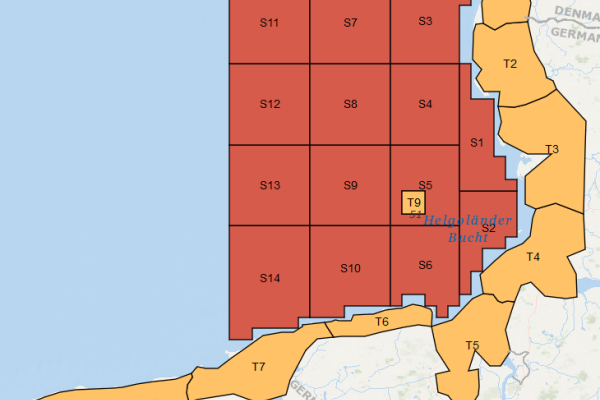
Complementing physical transport modelling, I also engage in habitat mapping and environmental classification, using sedimentological, ecological, and remote sensing data to produce spatially continuous representations of seabed characteristics and biological habitats. This work informs marine spatial planning, biodiversity assessments, and connections between physical processes and ecosystem structure.
Finally, I apply Bayesian Networks and other data-driven causal models to bring together heterogeneous data streams from model simulations, in situ measurements, and observations to quantify uncertainties, infer ecological connections, and support predictive decision-making in coastal systems. Together, these approaches aim to deliver robust, generalizable insights into marine connectivity, ecological dynamics, and environmental resilience that are relevant for science, policy, and coastal management.